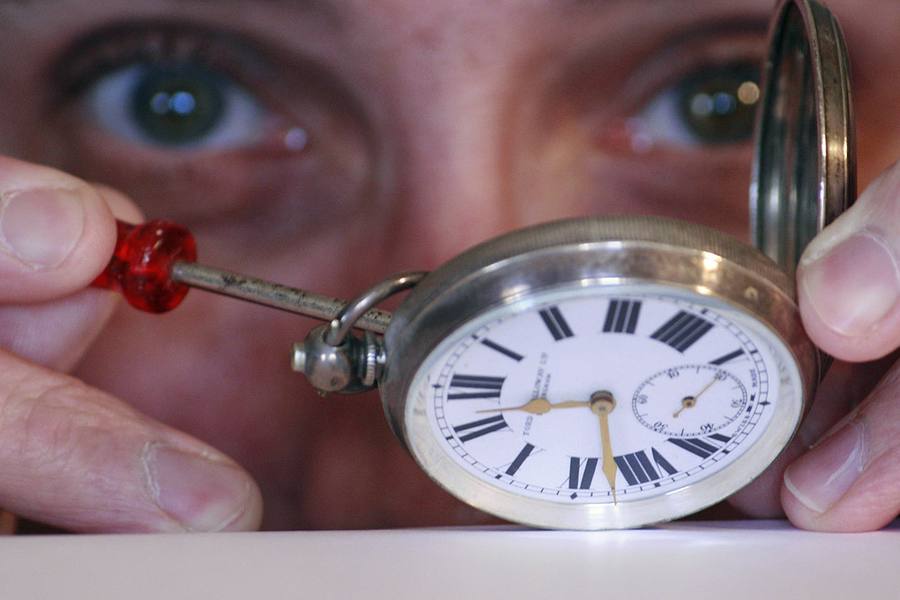
Bergeon 6767-F Spring Bar Tool
Image illustrative (photo de stock) ; ce n'est pas le produit exact.
Why The Cheap Tool Costs More
Cheap spring bar tools have soft, poorly finished tips that slip off the spring bar and gouge the case between the lugs. Those scratches are permanent and in one of the most visible places on a watch.
A good tool has hard, precisely shaped tips that seat properly on the spring bar shoulder and do not slip. The whole cost of the tool is repaid the first time it does not slip.
Anybody who has scratched a watch case with a cheap tool understands this immediately. Anybody who has not should take it on trust rather than learning it on a watch they care about.
Forked And Pointed Ends
The forked end engages the spring bar shoulder from outside the lugs and is what you use on most straps. The pointed end pushes the bar through a drilled lug hole from outside, where the case has them.
Watches with drilled lugs are considerably easier to work on because the pointed end never goes near the case finish at all, which eliminates the scratch risk almost entirely.
Knowing which end to use, and that a watch with drilled lugs should always be done from outside, is most of the skill involved in strap changing.
Replaceable Tips
The tips are replaceable, which matters because tips do eventually bend or blunt with use, and a bent fork is exactly what slips and scratches.
Replacement tips are inexpensive and swapping them takes a moment, which means the tool lasts indefinitely rather than becoming progressively more dangerous to use.
Inspecting the fork occasionally and replacing it when it looks worn is the maintenance that prevents damage, and it is worth doing before a job rather than after a scratch.
Technique And Protecting The Watch
The standard precaution is taping the case between the lugs with masking tape before starting, which costs nothing and prevents the damage entirely even if the tool does slip.
Working over a soft cloth catches a spring bar when it launches itself across the room, which happens regularly and is how spring bars get lost.
Pushing rather than levering is the correct technique, since levering against the case is what transmits force into the finish rather than into the spring bar.
Who It Suits
This suits anybody who changes straps at all, which is most watch owners, and particularly anybody who has more than one strap for a watch.
It suits less well somebody who will never change a strap, though that is a smaller group than it sounds since straps wear out.
It suits particularly well anyone with watches whose cases they care about, since the difference between this and a cheap tool is measured in permanent scratches.
The Verdict
The standard tool for a reason: hard precisely shaped tips that do not slip, replaceable when worn, and both a forked and a pointed end for every situation.
It costs several times what a cheap tool does, and the technique still matters more than the tool.
Tape the lugs before you start and work over a cloth. The tool prevents most damage and those two habits prevent the rest.
En un coup d'œil
Avantages
- Hard precisely shaped tips that seat properly and do not slip
- Replaceable tips mean the tool lasts indefinitely
- Forked and pointed ends cover every strap and lug type
- Prevents the permanent case scratches cheap tools cause
Inconvénients
- Several times the cost of a cheap tool
- Technique still matters as much as the tool
- Tips bend with use and need inspecting
- Does not help with screwed bracelet links
Questions fréquemment posées
Is an expensive tool really necessary?
Cheap tools have soft poorly shaped tips that slip and gouge the case between the lugs, permanently, in a very visible place. The cost is repaid the first time it does not slip, and anybody who has scratched a watch understands immediately.
How do I avoid scratching the case anyway?
Tape the lugs with masking tape before starting, work over a soft cloth so a launched spring bar is not lost, and push rather than lever — levering against the case is what transmits force into the finish.
What are the two ends for?
The fork engages the spring bar shoulder from outside the lugs, used on most straps. The point pushes the bar through a drilled lug hole from outside, which eliminates the scratch risk almost entirely on watches that have them.
Spécifications
| Type | Spring bar tool |
| Ends | Forked and pointed |
| Tips | Hardened, replaceable |
| Use | Strap and bracelet changes |
| Drilled lugs | Use pointed end from outside |
| Precaution | Tape lugs before starting |
| Workspace | Soft cloth to catch bars |
| Technique | Push, do not lever |
Résumé
Hard tips that do not slip, replaceable when worn, both ends covered. Tape the lugs and work over a cloth and you will never scratch a case.
Vérifier le prix sur Amazon